
Pack it right.
Six habits from thirty years of roof bags and our customers’ road trips.
- 01
Find your roof-load number
Your owner’s manual lists a maximum roof load, often in the 100 to 165 lb range for cars and crossovers. It includes the carrier and anything on the bars. Look it up once and write it on a piece of tape inside the bag.
- 02
Heavy inside, bulky on top
A roof carrier is for things that are big but light: sleeping bags, pads, tents, camp chairs, soft duffels. Coolers, water and tools ride inside the car, low and centered.
- 03
Pad the floor of the bag
A flat, clean floor protects the roof and the bag. Wipe the roof before you set the carrier down, and lay a mat or rack pads under it if your car has no bars.
- 04
Fill it, and fill it evenly
A full bag holds its shape and stays quiet. A half-empty bag flaps. Spread weight across the whole footprint so you don’t press a dent into the middle of the roof.
- 05
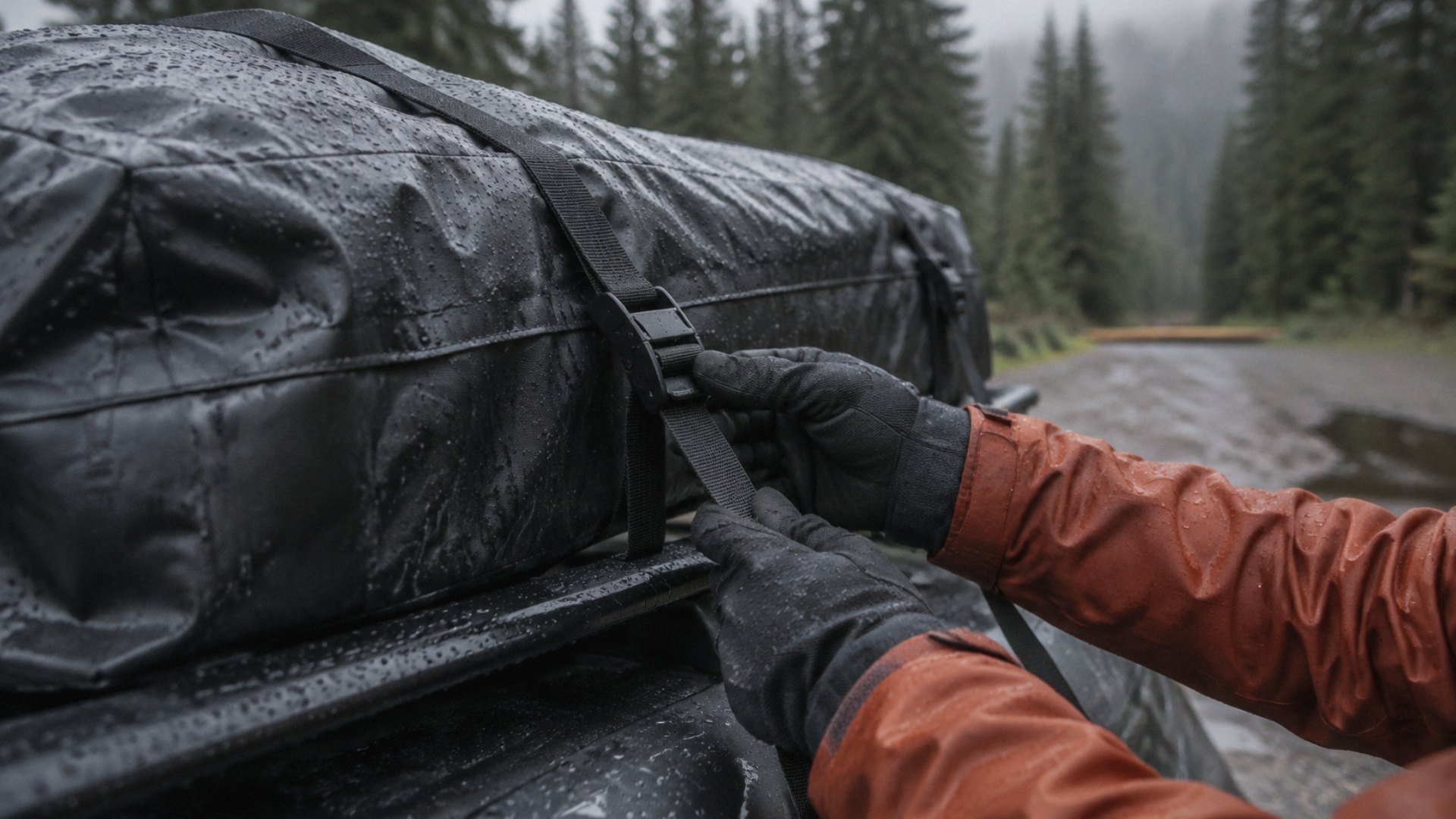
Straps snug, tails tamed
Run straps through the door openings, not the windows, and cinch them until the bag doesn’t shift when you push it. Then deal with the extra length. Our reviewers tuck tails into the door, zip-tie them, or tape them down. Any of those stops the slap at highway speed.
- 06
Check it at the first stop
Straps settle once you’re moving. At your first stop, pull over, push on the bag, re-tighten, and you’re set for the day.